
This week we engaged in place-based learning at Cottonwood Island Park. It was awesome to be able to learn on the land this week, explore Cottonwood Island Park, and spend time outside of the university classroom. We engaged in a lesson planning activity, which was a challenging and educational activity of exploration and creative thinking. My group focused on a grade 5 English lesson which could be taught/learned on the land. Our idea was that students could gather non-living items around the park, such as leaves or sticks, to be used in creating a story scene. The students could use these items found in nature to enhance creative thinking, and incorporate play into literature, while connecting with the land. Creating this lesson plan was challenging as we are just starting to explore the lesson plan template and the BC Curriculum, but it is through these challenging exploration activities that we are able to enhance our learning, hands-on. I am looking forward to gaining more familiarity and understanding of the lesson plan template and BC Curriculum over time.
During this place-based learning day, we also discussed the article: Decolonization is not a metaphor, by Tuck and Yang (2012). We were discussing how the word ‘decolonization’ is over-used in discourse and, when it is used, it needs to be followed by meaningful action, and go beyond a word to be used to ‘tick a box’. The action of decolonization should be integrated into the education system and classrooms. In terms of thinking about the purpose of this reading, as that was one of our discussion prompts, we were thinking about how we, as teachers, can and should approach decolonization in our classrooms and teaching careers.
Tuck, E., & Yang, K. W. (2012). Decolonization is not a metaphor. Decolonization: Indigeneity, Education & Society, 1(1), 1–40.
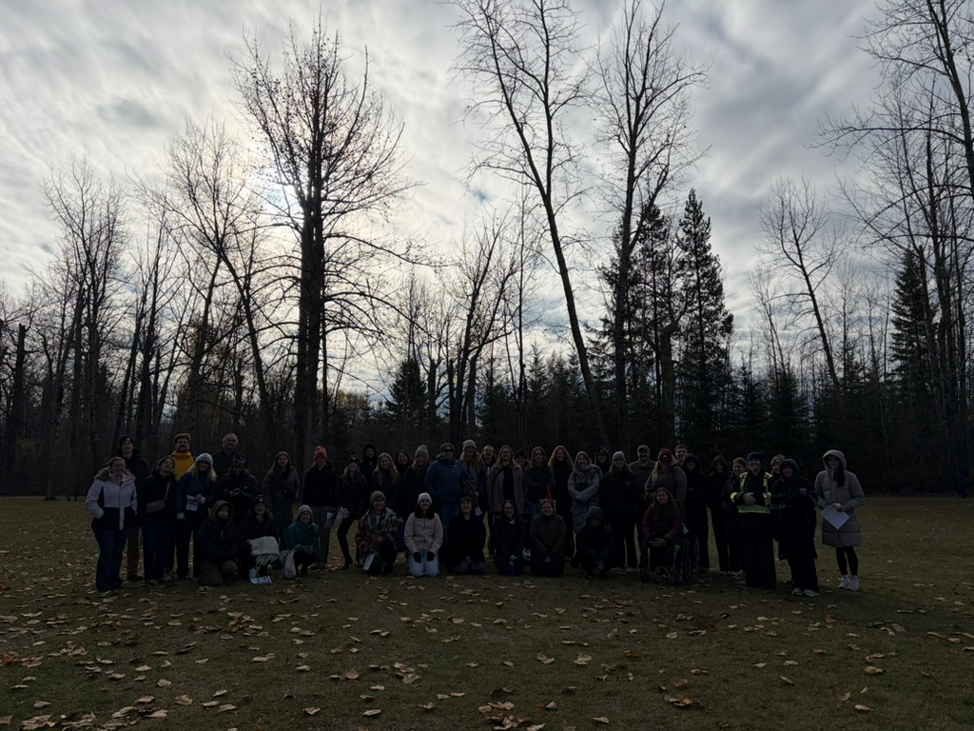
Here is an image of our class at Cottonwood Island Park:
Leave a Reply