A Digital Portfolio of Your Learning

Erica Kempster

Category: Uncategorised

Week 9 Learning Reflection – Prince George Public Library

This week our class was held at the Prince George Public Library. It was interesting visiting the public library because I used to go to the public library a lot when I was a kid, but I haven’t been there in many years. I used to always be excited to go explore new books with my mom and my sister, and it was a great community hub for us as kids! Visiting the public library brought back many positive memories, and made me inclined to start visiting the public library more often as they have so much to offer. Throughout our tour of the public library, I was surprised to see how many books they had for all different ages, and was interested to learn about the many other resources that they offer, such as kits and board games, as well as free tutoring, study rooms, computers, and library tours. It was very helpful to learn about these many resources that they offer, and to think about how these resources can be utilized specifically by teachers. I would love to take my future students to the public library to explore what they have to offer, as well as share the many opportunities for students, such as workshops and free tutoring. One resource that specifically interested me was the story kits for educators. Educators can pick a story kit topic, as well as specific age/grade, and the PGPL will put together a story kit full of books, felts, puppets, CDs, and more to support educational and interactive story time. This resource in particular is one that I would love to use in the future!

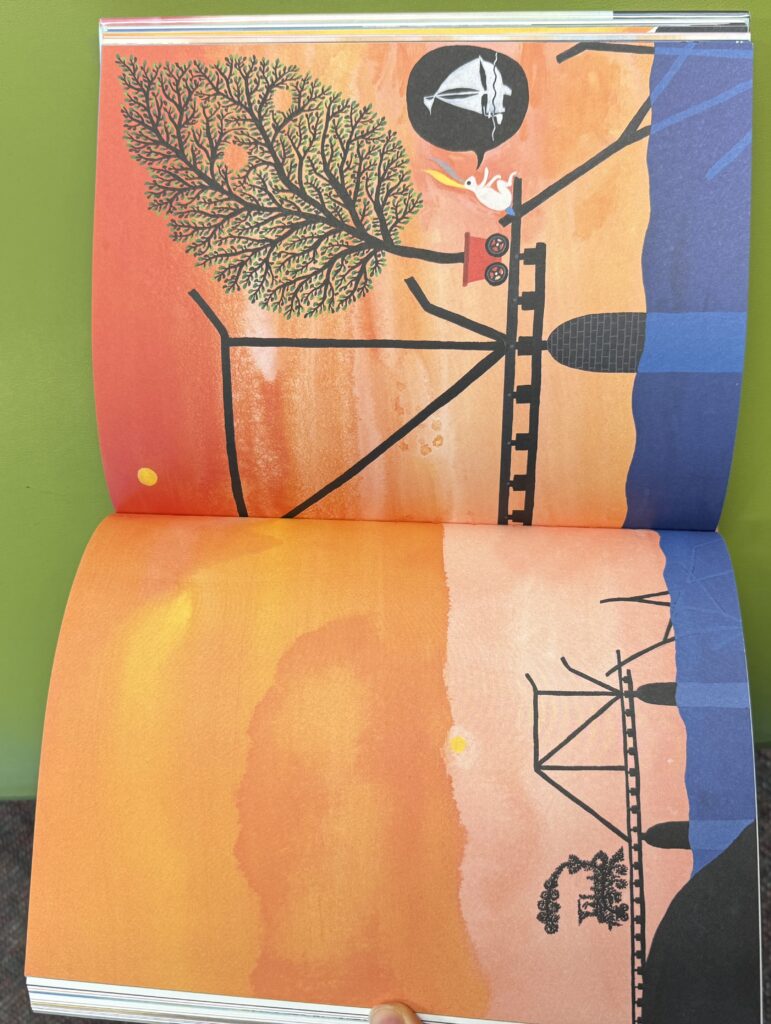
            During our time at the public library, we also explored different learning resources that could be useful for our lesson plans that we developed at Cottonwood Island Park. We discovered a plethora of learning resources throughout the public library, and it was very educational to think about how our lesson could have cross-curricular connections, as well as how it could be scaffolded across multiple lessons. The learning resource that we chose to use is a wordless picture book, which depicts many features, including a bunny. We thought that this book was really neat because it allows for creativity and imagination, and connects to our Cottonwood Island Park lesson plan about story creation and the land. I am looking forward to exploring more learning resources, and incorporating the PGPL resources into my future classroom and teaching career.

Here is an image from the book to get an idea of how this wordless story has lots to say!

Zsako, B. (2023). Bunny & Tree. Enchanted Lion Books.
Week 8 Learning Reflection – RJay Berra and Standard 2

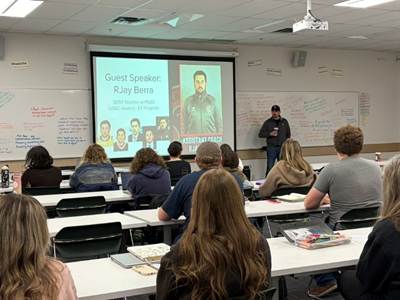
This week we had the privilege to learn from RJay Berra, a UNBC Alumni of the BEd program, and a SD57 teacher at PGSS. It was super helpful to ask him questions and advice on the education program, practicums, teaching, work-life balance, and more. One of the main points that I took away from his advice is the importance of positive student/teacher relationships. RJay articulated how important it is to built a supportive, caring, and encouraging classroom environment where students feel valued, and meaningful connections are fostered. He also focused on the importance of student-centered learning, and how incorporating student’s passions and interests, as well as your own passions and interests, can increase student engagement, and is an opportunity to meet student’s individual needs. Another significant point that RJay mentioned is owning your own mistakes. Modeling honesty and accountability as a teacher is impactful because students need to learn that everyone makes mistakes, which it totally normal and does not automatically mean failure, and the importance of leading with honesty, as well as how to be accountable for our actions. As the teacher, you are setting the standard. It is important to model positive behavior, keep open and honest communication, and make decisions for the betterment of your students. Every class/group of students will be different and have differing needs, meaning that the decisions based upon the “betterment of your students” will change. This points to the importance of enacting adaptability.

Everything that RJay shared with our class embodied the BCTF Standard 2: “Educators act ethically and maintain the integrity, credibility and reputations of the profession” (British Columbia Teachers’ Council, 2019, Standard 2). RJay articulated the importance of educators being role models by modeling honesty, accountability, and open-communication, and building a positive and supportive student-centered classroom environment. It became apparent that RJay models Standard 2 throughout his career as he explained how being a positive role model for his students has been a huge benefit, for himself, as well as his students. Educators should be held at a high standard, and this standard should be set by the teacher through mutual respect, and being a role model of positive behavior. I learned a lot throughout this class, and am thankful for RJay’s input and advice.

Reference: British Columbia Teachers’ Council. (2019). Professional standards for BC educators. Government of British Columbia. edu_standards.pdf

Here is a photo from the presentation:

Week 7 Learning Reflection – ARC-BC

This week we learned about accessible digital books through a presentation by Victoria Woelders, from the Accessible Resource Centre of British Columbia (ARC-BC). This presentation was very interesting and educational because I had no clue that these awesome resources existed! We learned that ARC-BC creates accessible digital books, mostly from novels and textbooks, for students with perceptual disabilities. Novels and textbooks are made into brail books, audio books, and color-blind friendly books. Creating these accessible resources for students is huge in their learning journey! I also learned that ARC-BC translates books into different languages, including Indigenous languages. It is really helpful to learn about these different resources to be able to support each student with individual needs, and make the world an easier place to learn for diverse students.

            I also learned a lot from this week’s Ted Talk video, Under the Table – The Importance of Presuming Competence, presented by Shelley Moore, because it was a very educational video on inclusive education. I do agree that it is super important to learn students’ individual needs, interests, and abilities, and how to support them in their learning journey. I also think that it is very important to believe in students, and change the “I can’t” narrative, because every student is capable of succeeding in learning, with the right tools and supports. The main thing that I took away from Shelley Moore’s talk is that students have a lot to teach us, and we, as teachers, have a lot to learn from each student.

            This week’s reading, “Assessment of Learning, for Learning, and as Learning” (Earl, 2003), was also very educational because, I have learned about summative and formative assessment before, but I have not thought about the different ‘uses’ of assessment. I learned that assessment of learning is the predominant form of assessment, generally in the form of tests or exams, and is used to report to students and parents, producing a rank among the students. Assessment for learning is formative, and is used for scaffolding the next steps in learning, while highlighting the student’s strengths and stretches. Lastly, assessment as learning is described as “the ultimate goal, where students are their own best assessors” (Earl, 2003, p. 5), and where students have the opportunity to make their own judgements. It was important that the author pointed out how all of these approaches to assessment are applicable, but finding balance between them is what is most important.

Earl, L. M. (2003). Assessment of learning, for learning, and as learning. In Assessment as learning: Using classroom assessment to maximize student learning (pp. 21–28). Corwin Press.

TEDxTalks (2016, March 11th). Under the Table – The Importance of Presuming Competence [Video]. YouTube. https://www.youtube.com/watch?v=AGptAXTV7m0

Week 6 Learning Reflection – Cottonwood Island Park

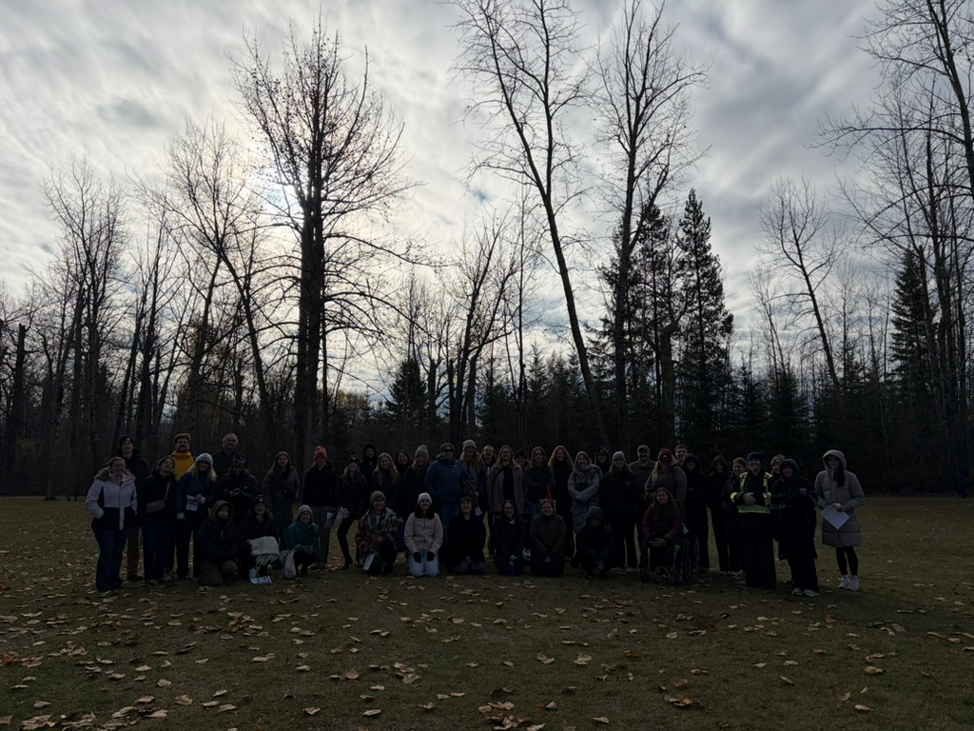
This week we engaged in place-based learning at Cottonwood Island Park. It was awesome to be able to learn on the land this week, explore Cottonwood Island Park, and spend time outside of the university classroom. We engaged in a lesson planning activity, which was a challenging and educational activity of exploration and creative thinking. My group focused on a grade 5 English lesson which could be taught/learned on the land. Our idea was that students could gather non-living items around the park, such as leaves or sticks, to be used in creating a story scene. The students could use these items found in nature to enhance creative thinking, and incorporate play into literature, while connecting with the land. Creating this lesson plan was challenging as we are just starting to explore the lesson plan template and the BC Curriculum, but it is through these challenging exploration activities that we are able to enhance our learning, hands-on. I am looking forward to gaining more familiarity and understanding of the lesson plan template and BC Curriculum over time.  

     During this place-based learning day, we also discussed the article: Decolonization is not a metaphor, by Tuck and Yang (2012). We were discussing how the word ‘decolonization’ is over-used in discourse and, when it is used, it needs to be followed by meaningful action, and go beyond a word to be used to ‘tick a box’. The action of decolonization should be integrated into the education system and classrooms. In terms of thinking about the purpose of this reading, as that was one of our discussion prompts, we were thinking about how we, as teachers, can and should approach decolonization in our classrooms and teaching careers.

Tuck, E., & Yang, K. W. (2012). Decolonization is not a metaphor. Decolonization: Indigeneity, Education & Society, 1(1), 1–40.

Here is an image of our class at Cottonwood Island Park:

Week 5 Learning Reflection – Blanket Exercise

This week we were privileged to be joined by Dr. Daniel Sims, who facilitated the blanket exercise with our class. This exercise was an eye-opening visual representation of the history of colonization in Canada, which has immensely impacted Indigenous peoples. This visual representation was educational as it enabled us to think deeper about the impacts on Indigenous peoples, such as displacement and death through settler colonialism, disease, residential schools, and the reserve system, through a means other than readings. Throughout this exercise, we witnessed groups of people leaving the exercise, to represent death, and our blankets continuously getting smaller, representing the loss of land. One of the aspect which stood out to me during this activity was the apology, given by Stephen Harper in 2008, as it acknowledged the harms caused by the residential school system, but did not change the ongoing impacts lingering in Canada today, nor the intergenerational trauma that many of our peers are living with. This exercise was heavy and brought up a lot of sad and angry emotions for many, as well as highlighted the fact that settler colonialism lives on today, and that much needs to be addresses towards truth, reconciliation, and healing. Reconciliation needs to go beyond words and recognition.

This idea that reconciliation needs to go beyond words and recognition relates to Tuck and Yang’s discussion throughout their article: Decolonization is not a metaphor (2012). The authors discuss how decolonization needs to go beyond changing narratives, attitudes, and institutions/societal structures, and enact real, restorative, and meaningful changes, such as the repatriation of Indigenous lands and life. ‘Decolonization’ should not be used as a surface-level “buzz-word” in order to make settlers feel better and “check a box”. This idea connects to the authors’ point of decolonization making “settler moves to innocence” possible, which is described as “those strategies or positionings that attempt to relieve the settler of feelings of guilt or responsibility without giving up land or power or privilege, without having to change much at all (Tuck & Yang, 2012, p. 10), as decolonization has been used by many settlers in order to check the box of ‘addressing colonialism’, without actually making positive structural changes, nor challenging these structures. Tuck and Yang describe how “settler moves to innocence” is a reproduction of white privilege, and encompasses denial and deflection of settler colonialism. The authors’ point out that “settler moves to innocence are hollow, [and] they only serve the settler” (Tuck & Yang, 2012, p. 10). This is the unfortunate reality of decolonization, which needs to be addressed and substantially changed. This week has enabled me to deeply reflect on my role as a settler, such as how not to become an ‘innocence’, and what can be done in order for reconciliation and decolonization to move beyond words of recognition, and towards meaningful action. I will be reflecting deeply on how this can be enacted throughout my role as an educator.

Tuck, E., & Yang, K. W. (2012). Decolonization is not a metaphor. Decolonization: Indigeneity, Education & Society, 1(1), 1–40.

Week 4 Learning Reflection – West Lake

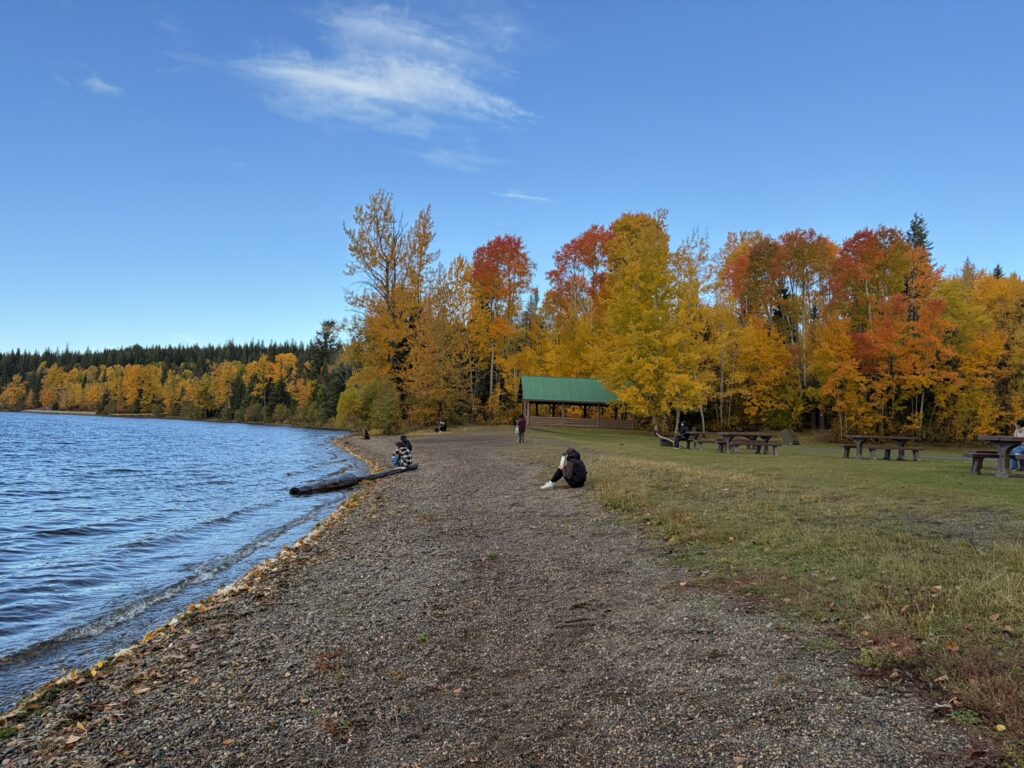
Reflecting on our class time at West Lake, I really enjoyed being out on the land to participate in land-based learning. It was refreshing to feel the fall air, and learn outside of the walls of the classroom. Participating in land-based learning activities makes me more inclined to incorporate land-based learning into my teaching career, and gives us practical lesson ideas, such as the walking curriculum. I noticed how much more observant I became of the environment around me during the walking curriculum, and I was able to deeply explore the changing season surrounding us. I noticed how soft the bright colored leaves were on the birch tree, and was taken aback by the deep red, orange, and yellow leaves, ready to fall.

Here is a picture that Christine took of the beautiful fall trees!

      Another reflection that I have from our West Lake experience is the discussions that we had around land acknowledgements. Through reflection on my connection to people, place, and land, I focused on my gratefulness for the land, when thinking of personal land acknowledgements. I spend a lot of time on the land, whether that be hiking, skiing, hunting, or star-gazing, and I have realized that it is easy to take the land for granted if I do not allow myself time for reflection and gratitude. I am very grateful to be on the traditional lands of the Lheidli T’enneh first nation, and am very appreciative for everything that the land provides for me, such as joyful experiences, adventure, and animals to feed my family. It is vital that I continue to take care of and give back to the land as fostering this reciprocal relationship is my responsibility as a visitor on this beautiful traditional territory.

      I would also like to reflect on the Four R’s that we learned about through Kirkness & Barnhardt’s article: First Nations and Higher Education: The Four R’s – Respect, Relevance, Reciprocity, Responsibility. The Four R’s exemplify what we, as educators, need to keep in the forefront of our minds as education should model these principals in order to promote inclusivity, diversity, and holism. I have learned through this article that education should be more than just checking boxes in order to get a higher paying job, and should not draw students away from who they are. This article on the Four R’s has sparked a lot of reflection for me, especially of my own education journey, as I have seen education as a stepping stone in gaining more opportunities and higher paying jobs, which has, in turn, drawn me away from who I am. I am realizing the importance of holism in education, and am wanting to change this ‘box-checking’ narrative for my future students, as the well-being of each individual student is valuable.

Kirkness, V. J., and Barnhardt, R. (1991). First Nations and Higher Education: The Four R’s – Respect, Relevance, Reciprocity, Responsibility. Journal of American Indian Education, 30(3), 1-15. http://www.jstor.org/stable/24397980

Powered by WordPress & Theme by Anders Norén