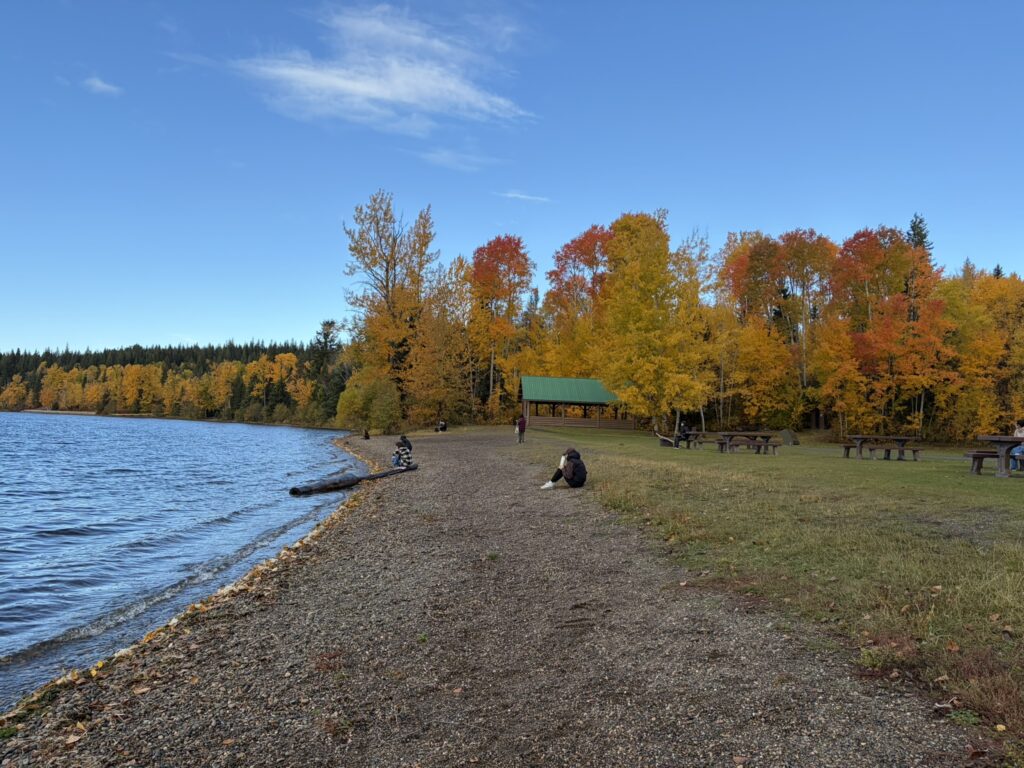
Reflecting on our class time at West Lake, I really enjoyed being out on the land to participate in land-based learning. It was refreshing to feel the fall air, and learn outside of the walls of the classroom. Participating in land-based learning activities makes me more inclined to incorporate land-based learning into my teaching career, and gives us practical lesson ideas, such as the walking curriculum. I noticed how much more observant I became of the environment around me during the walking curriculum, and I was able to deeply explore the changing season surrounding us. I noticed how soft the bright colored leaves were on the birch tree, and was taken aback by the deep red, orange, and yellow leaves, ready to fall.
Here is a picture that Christine took of the beautiful fall trees!
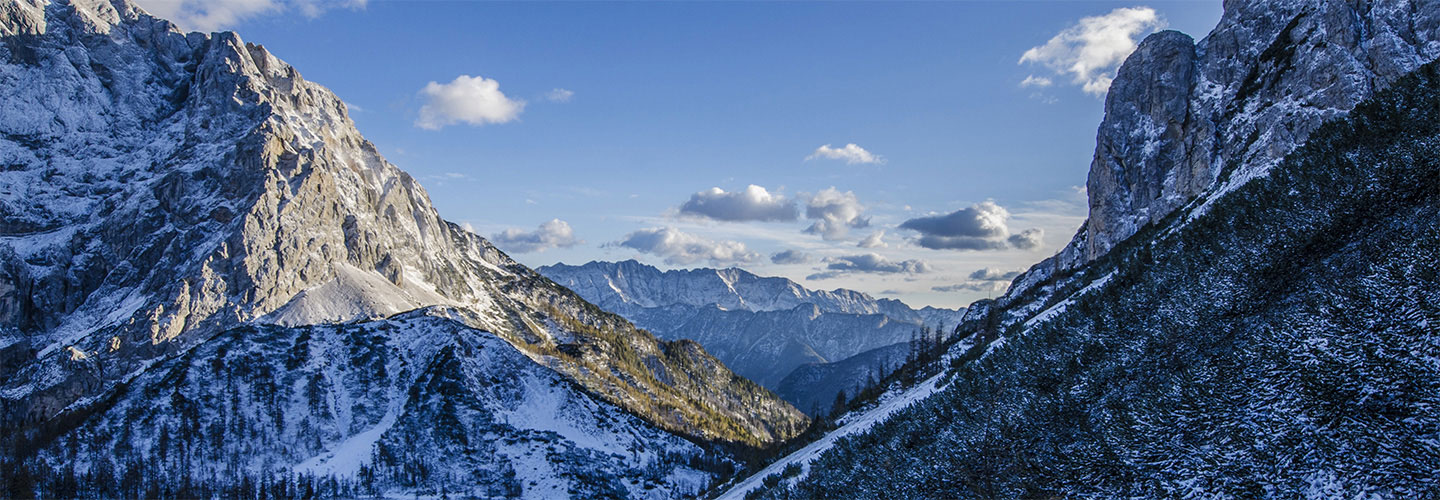
Another reflection that I have from our West Lake experience is the discussions that we had around land acknowledgements. Through reflection on my connection to people, place, and land, I focused on my gratefulness for the land, when thinking of personal land acknowledgements. I spend a lot of time on the land, whether that be hiking, skiing, hunting, or star-gazing, and I have realized that it is easy to take the land for granted if I do not allow myself time for reflection and gratitude. I am very grateful to be on the traditional lands of the Lheidli T’enneh first nation, and am very appreciative for everything that the land provides for me, such as joyful experiences, adventure, and animals to feed my family. It is vital that I continue to take care of and give back to the land as fostering this reciprocal relationship is my responsibility as a visitor on this beautiful traditional territory.
I would also like to reflect on the Four R’s that we learned about through Kirkness & Barnhardt’s article: First Nations and Higher Education: The Four R’s – Respect, Relevance, Reciprocity, Responsibility. The Four R’s exemplify what we, as educators, need to keep in the forefront of our minds as education should model these principals in order to promote inclusivity, diversity, and holism. I have learned through this article that education should be more than just checking boxes in order to get a higher paying job, and should not draw students away from who they are. This article on the Four R’s has sparked a lot of reflection for me, especially of my own education journey, as I have seen education as a stepping stone in gaining more opportunities and higher paying jobs, which has, in turn, drawn me away from who I am. I am realizing the importance of holism in education, and am wanting to change this ‘box-checking’ narrative for my future students, as the well-being of each individual student is valuable.
Kirkness, V. J., and Barnhardt, R. (1991). First Nations and Higher Education: The Four R’s – Respect, Relevance, Reciprocity, Responsibility. Journal of American Indian Education, 30(3), 1-15. http://www.jstor.org/stable/24397980